
Country Information
| Sovereign State | Yes (Territory of the United States) |
| Country Codes | UM, UMI, 581 |
| Official Name | United States Minor Outlying Islands |
| Continent | Oceania |
| Capital | No official capital |
| Government Type | Unincorporated, unorganized territories of the United States |
| Currency | United States Dollar (USD) |
| Calling Code | No distinct calling code |
| Member Of | N/A (Territory of the United States) |
| Population | No permanent population |
| Total Area | 34.2 square kilometers |
| Highest Point | Varies by island; on Wake Island: Wake Island High Point (6 meters or 20 feet) |
| Lowest Point | Pacific Ocean (0 meters) |
| GDP Per Capita | N/A |
| Life Expectancy | N/A |
| Internet TLD | .um (rarely used) |
United States Minor Outlying Islands National Anthem
The Star-Spangled Banner
O say can you see, by the dawn’s early light,
What so proudly we hailed at the twilight’s last gleaming,
Whose broad stripes and bright stars through the perilous fight,
O’er the ramparts we watched, were so gallantly streaming?
Flags of Neighboring Countries
The United States Minor Outlying Islands are scattered and remote, with no immediate neighboring countries.
History of the United States Minor Outlying Islands Flag
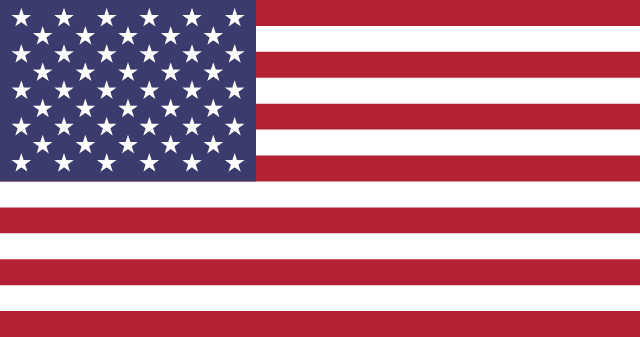
The flag of the United States Minor Outlying Islands is predominantly the flag of the United States, due to their status as unincorporated territories. The U.S. flag, known worldwide, consists of thirteen horizontal stripes of red and white, with a blue rectangle in the canton bearing fifty small, white, five-pointed stars. Each star represents a U.S. state, while the stripes symbolize the original Thirteen Colonies.
The history of the U.S. flag dates back to 1777, with various changes reflecting the admission of new states into the Union. The current 50-star version was adopted on July 4, 1960, after Hawaii’s statehood. The U.S. flag is a powerful symbol of American democracy, freedom, and history.
For the United States Minor Outlying Islands, the flag also represents the extended reach of the U.S. across remote parts of the Pacific and Caribbean. Despite the islands’ small size and lack of permanent inhabitants, the flag symbolizes national sovereignty and territorial integrity. The U.S. flag’s presence in these territories underscores the nation’s history of exploration, military significance, and scientific research in these remote areas.