
Country Information
| Sovereign State | No (Part of the Kingdom of the Netherlands) |
| Country Codes | AW, ABW, 533 |
| Official Name | Aruba |
| Continent | North America |
| Capital | Oranjestad |
| Government Type | Unitary parliamentary constitutional monarchy |
| Currency | Aruban florin (AWG) |
| Calling Code | +297 |
| Member Of | Part of the Kingdom of the Netherlands; associate member of the Caribbean Community (CARICOM) |
| Population | Approx. 106,000 (as of 2023) |
| Total Area | 180 square kilometers |
| Highest Point | Mount Jamanota (188 meters or 617 feet) |
| Lowest Point | Caribbean Sea (0 meters or 0 feet) |
| GDP Per Capita | Approx. $25,300 (as of 2023) |
| Life Expectancy | Approx. 76 years (as of 2023) |
| Internet TLD | .aw |
Aruban National Anthem
Aruba Dushi Tera
Aruba precious country
Our beloved homeland
Our altar of the fatherland
We dedicate our lives to you
Your beaches so much admired
With palm trees all adorned
Your coat of arms and flag
Is the proudness of our heart
The greatness of our people
Is their great cordiality
That God may guide and preserve
His love for liberty
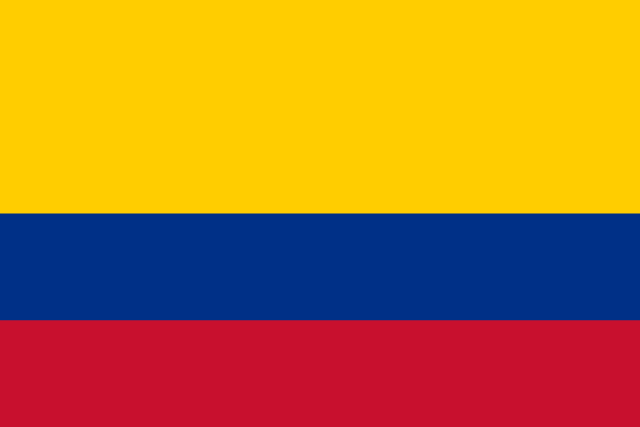
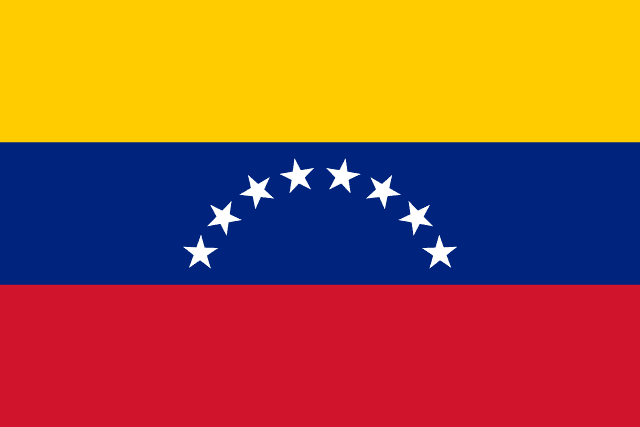
Flags of Neighboring Countries
History of the Aruban Flag
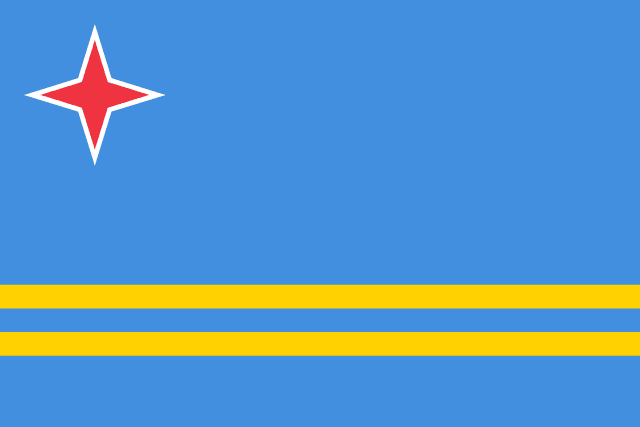
The flag of Aruba was officially adopted on March 18, 1976, reflecting the island’s cultural heritage, landscape, and aspirations. The design of the flag is symbolic and thoughtfully represents various aspects of Aruban identity.
The flag features a field of light blue, known as “Larkspur” or “U.N. blue”, symbolizing the sea surrounding Aruba. The two narrow stripes at the bottom represent the solid foundation of the island, with the yellow being the abundant sunshine and the white depicting the pure white sandy beaches. The four-pointed star in the top left corner is a symbol of the island itself. The red color of the star signifies the blood shed by Arubans during war and struggle, while the white outline around the star symbolizes the white sandy beaches that encircle the island.
The choice of March 18 for the flag’s adoption commemorates the date in 1948 when the Netherlands granted Aruba the right to autonomously decide to remain a part of the Kingdom of the Netherlands or to pursue full independence. Since its adoption, the Aruban flag has been a symbol of national pride, unity, and the distinct cultural identity of Aruba.
Throughout its history, Aruba’s flag has remained unchanged, serving as a constant symbol of the island’s heritage and its aspirations for the future. The flag represents Aruba’s commitment to its own identity while maintaining a strong connection with the Kingdom of the Netherlands. It is a source of pride for Arubans and is prominently displayed across the island, symbolizing the spirit and resilience of its people.